
4(0.00)
the most probable value on a grid of 0 to 30with the probability of every value
- 2 0.01
- 3 0.07
- 4 0.84
- 5 0.07
- 6 0.01
number 4expected 3.99confidence 0.84your code sends the reminder for 4
A number question asks for one value on a grid you set. Above, a customer statement goes in as text and overdue comes back as 4 with probability 0.84, the full distribution over 0 to 30 beside it. It is the fourth type, next to Choice, Score and Truth, and it is read the same way: a typed answer with probabilities you can threshold.
What it answers#
- Counts: cars in a drone frame, items on a shelf, pallets in a bay, overdue invoices in a statement, open findings in a report, steps in a plan another model wrote.
- Values read off the input: the year a contract was signed, the days until a deadline, the percentage of a page that is tables, a price in a stated range.
- Ratings and brackets: a review's rating out of ten (in halves once they follow the first release), an age bracket from a form, a severity from 1 to 5 when the levels are plain numbers.
Use a Score when each level has a meaning in words (routine, urgent, critical). Use a number when the answer is a quantity, and the values in between mean what they say.
Request#
{
  "cars": {
    "type": "number",
    "instructions": "How many cars are visible in the image?",
    "min": 0,
    "max": 50
  }
}type"number"required- The question type.
instructionsstring- What to count or read, in one sentence. The same field as on every type.
minnumber- The lowest value the answer can take. Default 0.
maxnumber- The highest value, at least
min. Default 255. stepnumber- The spacing of the grid, above 0. Default 1: whole numbers, what the first release serves.
0.5(halves) and0.1(one decimal) follow.
A number question uses no criteria: the grid is the set of answers. Keep min at or below max, and use a supported grid.
Response#
{
  "cars": {
    "type": "number",
    "number": 7,
    "expected": 6.97,
    "confidence": 0.77,
    "probabilities": {
      "5": 0.01,
      "6": 0.12,
      "7": 0.77,
      "8": 0.09,
      "9": 0.01
    }
  }
}numbernumber- The most probable value of the grid. Always a value your grid allows.
expectednumber- The probability-weighted mean: a fractional estimate, even on a whole-number grid.
confidencenumber- The probability of
number, from 0 to 1. probabilitiesobject- Every grid value with a probability above 0.001, keyed by the value as a string (
"7","3.5"). They sum to 1, up to rounding.
expected = sum(v · p_v)
confidence = p_number
- v
- a value of the grid
- p_v
- the probability of v
- p_number
- the probability of the most probable value
Keys are written the shortest way: "7", never "7.0"; "3.5", never "3.50". Parse them as numbers before you sort: in most languages an object keeps "10" ahead of "2.5".
On text#
A statement as an accounting system exports it, with two number questions and a Choice in one request. overdue counts the invoices past due on the statement date (4); oldest_days reads how late the oldest one is (78, expected 78.08); reminder picks what to send. Every answer comes from one read of the statement.
https://api.decisionnode.comCustomer statement
Account: Norrvik Supply AB (30-4471)
Statement date: 2026-10-01
Terms: net 30, amounts in EUR
Invoice Issued Due Amount Status
INV-2041 2026-06-15 2026-07-15 1,240.00 open
INV-2058 2026-07-03 2026-08-02 410.00 paid 2026-08-01
INV-2063 2026-07-21 2026-08-20 860.00 open
INV-2069 2026-07-29 2026-08-28 395.00 paid 2026-09-02
INV-2077 2026-08-06 2026-09-05 1,120.00 part paid, 300.00 open
INV-2081 2026-08-13 2026-09-12 640.00 open
INV-2090 2026-08-31 2026-09-30 780.00 paid 2026-09-29
INV-2094 2026-09-10 2026-10-10 520.00 open
INV-2102 2026-09-24 2026-10-24 915.00 openThe request carries that statement as its state, one JSON string. Below it reads as a placeholder so the questions stay in view; the copy button copies the full request, statement included, ready to run.
curl https://api.decisionnode.com/v1/decide \
  -H "Authorization: Bearer $DECISIONNODE_API_KEY" \
  -H "Content-Type: application/json" \
  -d '{
    "model": "decisionnode-latest",
    "state": "<statement.txt, above>",
    "questions": {
      "overdue": {
        "type": "number",
        "instructions": "How many invoices on this statement are overdue on the statement date?",
        "min": 0,
        "max": 30
      },
      "oldest_days": {
        "type": "number",
        "instructions": "How many days past its due date is the oldest unpaid invoice?",
        "min": 0,
        "max": 180
      },
      "reminder": {
        "type": "choice",
        "instructions": "Which reminder should go out today?",
        "criteria": {
          "none": "nothing is overdue, send nothing",
          "friendly": "a friendly reminder for one recent invoice",
          "firm": "a firm reminder listing every overdue invoice",
          "final": "a final notice before the account is passed to collections"
        }
      }
    }
}'{
"model": "decisionnode-1.0",
"answers": {
"overdue": {
"type": "number",
"number": 4,
"expected": 3.99,
"confidence": 0.84,
"probabilities": {
"2": 0.01,
"3": 0.07,
"4": 0.84,
"5": 0.07,
"6": 0.01
}
},
"oldest_days": {
"type": "number",
"number": 78,
"expected": 78.08,
"confidence": 0.61,
"probabilities": {
"75": 0.01,
"76": 0.03,
"77": 0.13,
"78": 0.61,
"79": 0.14,
"80": 0.05,
"81": 0.02,
"82": 0.01
}
},
"reminder": {
"type": "choice",
"choice": "firm",
"confidence": 0.68,
"probabilities": {
"final": 0.19,
"firm": 0.76,
"friendly": 0.04,
"none": 0.01
}
}
},
"usage": { "input_tokens": 445, "output_tokens": 0 }
}On an image#
images[0] "frame"
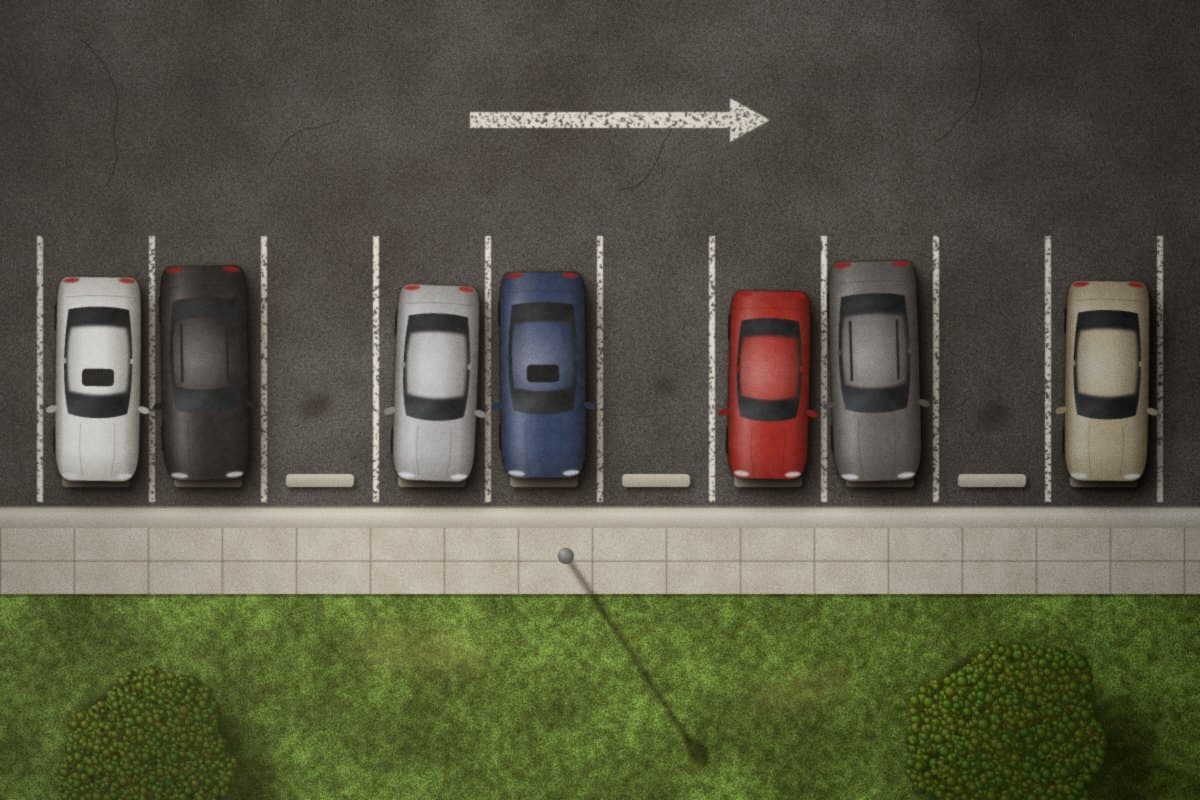
one read of the frame: the answer is the count and its distribution, not where each object is
state
Drone frame over row B4 of the north car park, camera pointing straight down.
question
cars How many cars are visible in the image?
input 328 tokensoutput 0, free
carsNumberexpected 6.97
7(0.00)
- 5 0.01
- 6 0.12
- 7 0.77
- 8 0.09
- 9 0.01
your code logs 7 cars at confidence 0.70 or more
The frame goes in images, the question asks for a count on a 0 to 50 grid, and the answer is a number your code can store, compare or act on. DecisionNode reads the image itself, in the same pass as the state and the question: there is no caption step in between.
https://api.decisionnode.comcurl https://api.decisionnode.com/v1/decide \
-H "Authorization: Bearer $DECISIONNODE_API_KEY" \
-H "Content-Type: application/json" \
-d '{
"model": "decisionnode-latest",
"state": "Drone frame over row B4 of the north car park, camera pointing straight down.",
"images": [
{ "id": "frame", "media_type": "image/jpeg", "data": "<base64>" }
],
"questions": {
"cars": {
"type": "number",
"instructions": "How many cars are visible in the image?",
"min": 0,
"max": 50
}
}
}'The grid#
min, max and step set every value the answer can take. Without them the grid is 0 to 255 in whole numbers. A grid of up to 256 values is answered as one question. A finer or wider grid is composed inside the same call (the whole part and the decimals, for example), and you still get one answer.
| Grid | Request | Values | First release |
|---|---|---|---|
| Cars in a frame | "min": 0, "max": 50 | 51 | Yes |
| Year a contract was signed | "min": 1990, "max": 2026 | 37 | Yes |
| Default range | no min, max or step | 256 | Yes |
| Rating in halves | "min": 0, "max": 5, "step": 0.5 | 11 | Follows |
| Percentage, one decimal | "min": 0, "max": 100, "step": 0.1 | 1,001 | Follows |
Reading the answer#
- Act on
numberwhenconfidenceclears the bar you set for this question. The frame above, 7 at 0.77, is a count your code can log, bill or route on. - Use
expectedwhere a fractional estimate is better than a whole one: averages across many frames, forecasts, sorting. - Read
probabilitiesfor the shape. A split answer, "probably 7, maybe 8", looks like{"6": 0.21, "7": 0.62, "8": 0.14}:numberis 7 at 0.62, and adding its neighbours gives 0.97, the chance the true value is within one.
"Probably 7, maybe 8" never waits on anyone. Below your bar, your code escalates on its own: it re-checks with DecisionNode-1.0 when the first call went to DecisionNode-1.0 Flash, and if the answer is still split it takes the safe end of what is likely, such as planning for 8 cars rather than 7.
# decide(request) posts the request to /v1/decide and returns its answers
ACT_AT = 0.7   # per question, in config

def count_cars(request):
    cars = decide({**request, "model": "decisionnode-flash-latest"})["cars"]
    if cars["confidence"] < ACT_AT:     # probably 7, maybe 8: ask the full model
        cars = decide({**request, "model": "decisionnode-latest"})["cars"]
    if cars["confidence"] >= ACT_AT:
        return cars["number"]           # sure: act on it

    # still split: take the high end of the likely values, automatically
    likely = [float(v) for v, p in cars["probabilities"].items() if p >= 0.1]
    return int(max(likely))             # a whole-number grid: an int, like the sure path
Beyond counting#
- Retail and logistics: items on a shelf, pallets in a bay, vehicles in a yard, from one camera frame.
- Documents: overdue invoices in a statement, open findings in an audit report, mentions of a product in a thread.
- Agriculture and inspection: fruit on a branch, defects on a surface, animals in a pen.
- Checks on other models: how many steps a generated plan has, how many sources an answer cites.
- Values, not counts: the year a document was issued, a percentage, a price in a stated range, and once finer grids follow, a rating in halves.
Billing#
A number question costs what a choice with as many options costs: its grid counts like one option per value. A 0 to 50 count is billed like a choice of 51 options. Images are priced as on every call, and batch jobs take number questions at half the price, like every other type. Output stays free. See Pricing and billing.